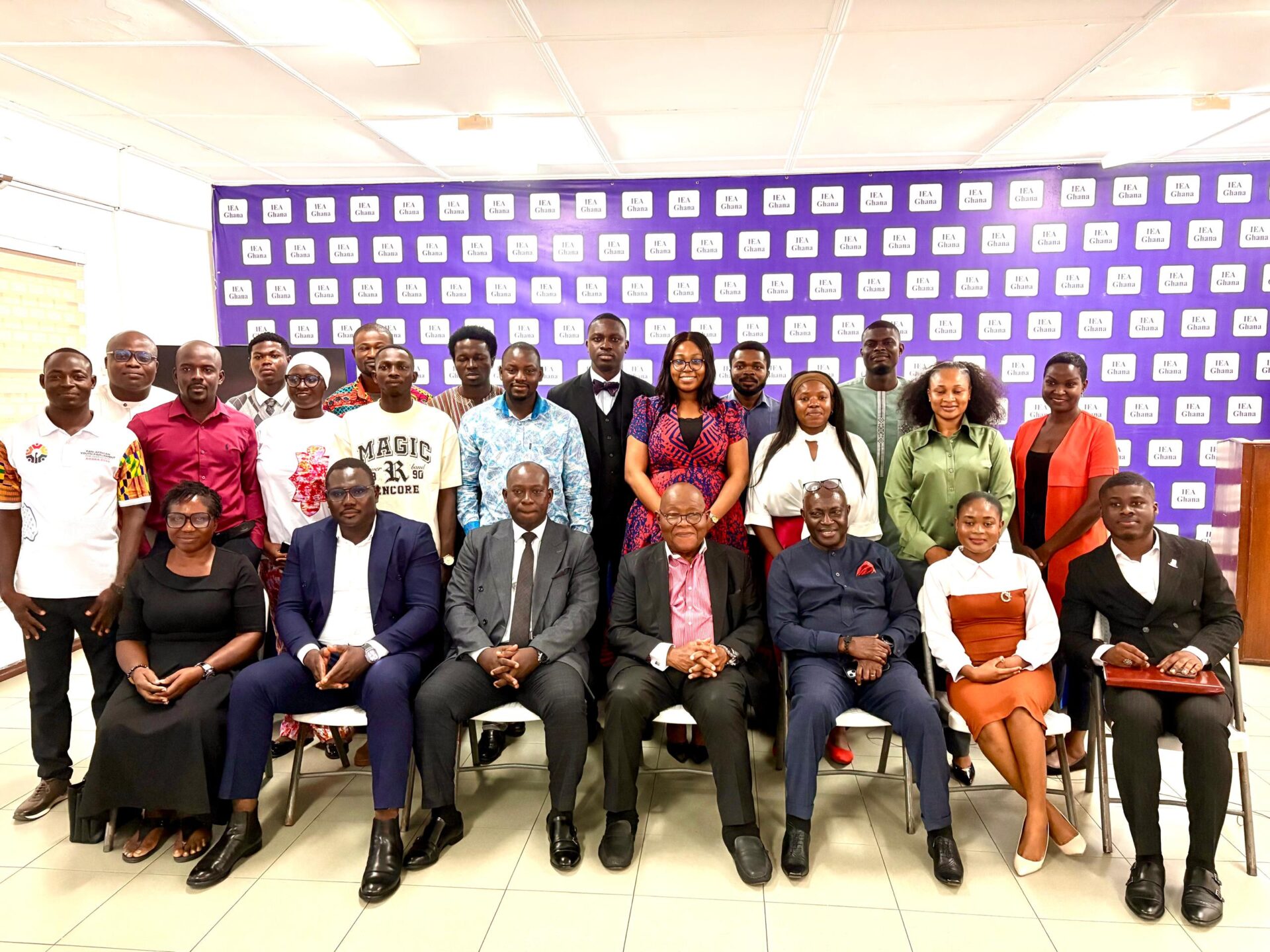
The Institute of Economic Affairs (IEA Ghana) on Tuesday, 13 October 2026, convened a special engagement with student and youth organisations as part of its ongoing Views and Reflections Programme, providing a platform for young Ghanaians to contribute to the national conversation on constitutional reform.
Held at the IEA Dialogue Centre in Accra, the engagement focused on the theme, “The Prempeh Committee’s Report and Government’s Position on Constitutional Review.” It brought together representatives of the National Union of Ghana Students (NUGS), the Ghana Youth Federation (GYF) and the Law Students’ Network (LSN) to examine the implications of proposed amendments to Ghana’s 1992 Constitution.
The discussions highlighted the importance of ensuring that constitutional reform reflects not only the country’s institutional and political priorities but also the aspirations of younger generations whose lives and opportunities will be shaped by the resulting governance framework.
Participants examined a broad range of issues, including youth representation in constitutional decision-making, presidential powers, parliamentary independence, judicial accountability, political participation, employment, entrepreneurship and long-term national development planning.
The programme featured contributions from Mr Titus Owusu Darko, Secretary for Innovation, Entrepreneurship and Skills Development of NUGS; Mr Abraham Kwaku Gyasi, President of the Law Students’ Network; and Mr Sherif Ghali, President of the Ghana Youth Federation.
Former Speaker of Parliament and IEA Distinguished Fellow, Rt. Hon. Professor Aaron Mike Oquaye, delivered the opening and closing remarks, while Dr William Kofi Osew moderated the discussion.
Youth Participation Must Extend Beyond Consultation
A central issue emerging from the engagement was the need to provide young people with a more meaningful role in the constitutional reform process.
President of the Ghana Youth Federation, Mr Sherif Ghali, called for direct youth representation on the Constitution Review Implementation Committee (CRIC), arguing that the participation of young people should extend beyond stakeholder consultations to the institutions responsible for translating proposed reforms into constitutional amendments.
He maintained that young people constitute a significant proportion of Ghana’s population and electorate and should consequently have a substantive role in shaping the constitutional arrangements that will govern their future.
Mr Ghali also questioned the adequacy of proposals to allocate 24 parliamentary seats through proportional representation to women, persons with disabilities and young people within a proposed 300-member Parliament.
He argued that an equal allocation among the three groups would leave young people with only eight seats, a share he considered inadequate. He therefore called for greater clarity in the proposed representation arrangements to ensure that youth inclusion is meaningful rather than merely symbolic.
The GYF President further raised concerns about barriers to political participation, including the high cost of contesting elections and constitutional age requirements for public office. He welcomed efforts to lower the minimum age for presidential candidates but encouraged further consideration of measures that would expand opportunities for qualified young people to participate in national leadership.
As part of efforts to broaden youth involvement, Mr Ghali announced plans by the Federation to organise district-level consultations, consolidate the perspectives of youth organisations and submit recommendations to the relevant constitutional reform institutions.
Stronger Institutions and Accountability Central to Reform
Presenting the perspective of the Law Students’ Network, its President, Mr Abraham Kwaku Gyasi, emphasised the importance of ensuring that the constitutional review process addresses structural weaknesses in Ghana’s governance system.
He raised concerns about the concentration of executive authority and the extent of government influence over decisions concerning proposed restrictions on presidential powers.
While acknowledging the Government’s authority to consider and respond to the recommendations of the Constitution Review Committee chaired by Professor H. Kwasi Prempeh, Mr Gyasi argued that constitutional reform should be informed by broad national deliberation and consensus.
He called for consideration of a representative constituent or consultative assembly to examine contested reform proposals and provide opportunities for diverse national interests to contribute to decisions on the country’s constitutional future.
The Law Students’ Network also supported proposals to strengthen the separation of powers between the Executive and Legislature, including preventing Members of Parliament from simultaneously serving as ministers.
According to Mr Gyasi, strengthening parliamentary independence would improve legislative oversight and enable Parliament to discharge its constitutional responsibilities with greater institutional autonomy.
He further highlighted the importance of protecting judicial independence through credible and transparent appointment arrangements.
On proposals to extend the presidential term from four to five years, the Network questioned whether a longer mandate would necessarily address the institutional and governance challenges confronting the country. It called for evidence-based consideration of such changes, accompanied by measures to strengthen accountability and institutional effectiveness.
The presentation reinforced the importance of examining both the substance of constitutional amendments and the process through which they are developed, particularly where proposed reforms concern the powers and responsibilities of existing institutions.
Linking Constitutional Reform to Jobs, Education and Economic Opportunity
For the National Union of Ghana Students, constitutional reform must also be examined through its implications for the everyday economic and social realities of young Ghanaians.
Mr Titus Owusu Darko, Secretary for Innovation, Entrepreneurship and Skills Development of NUGS, urged stakeholders to connect discussions about constitutional arrangements to the broader questions of employment, entrepreneurship, education and the changing demands of the labour market.
He drew attention to challenges confronting young people, including unemployment, limited access to entrepreneurial finance, inadequate practical skills and the gap between educational preparation and employment opportunities.
Mr Darko argued that constitutional and governance reforms should promote an institutional environment in which opportunities are determined by merit, public resources are managed responsibly and young people are able to participate meaningfully in national development.
He further proposed that major constitutional reform measures should be assessed for their potential implications for young people, particularly in education, employment, entrepreneurship, gender inclusion and regional development.
Such assessments, he explained, would help ensure that policymakers consider the long-term consequences of constitutional changes for future generations.
His intervention broadened the discussion beyond institutional design to the relationship between constitutional governance and the economic well-being of citizens.
Constitutional Reform Must Support Long-Term National Development
In his reflections, former Speaker of Parliament and IEA Distinguished Fellow, Professor Aaron Mike Oquaye, underscored the need to approach constitutional reform from the perspective of Ghana’s long-term development aspirations.
He emphasised that constitutional arrangements should not be assessed solely in terms of how political power is distributed, but also in terms of their capacity to promote economic development, institutional effectiveness and continuity in national planning.
Professor Oquaye drew attention to the recurring challenge of development projects being abandoned or disrupted following changes in government, arguing that Ghana required stronger institutional mechanisms to safeguard national development priorities.
He advocated strengthening the National Development Planning Commission to provide a more effective framework for long-term development planning and continuity across successive administrations.
He also highlighted the importance of natural resource governance, calling for greater attention to domestic value addition and the creation of employment opportunities from Ghana’s mineral and other natural resources.
His remarks reinforced the view that constitutional reform should help establish institutions capable of sustaining development policies, strengthening accountability and ensuring that public resources are managed in the national interest.
Advancing an Inclusive and Nationally Owned Reform Process
The youth engagement forms part of the IEA’s broader programme of structured public dialogue on the report of the Constitution Review Committee and the Government’s subsequent position on the proposed reforms.
Through successive editions of the Views and Reflections Programme, the Institute has provided opportunities for political actors, constitutional experts, legal practitioners, religious leaders, media representatives, civil society organisations and other stakeholders to examine the issues arising from the constitutional review exercise.
The inclusion of student and youth organisations represents an important dimension of this engagement, recognising that constitutional reform has intergenerational implications and that younger citizens have legitimate interests in the institutions, rights and governance arrangements being considered.
The IEA has consistently emphasised the need for comprehensive public education, meaningful consultation, transparency and broad national consensus in the constitutional reform process.
In its earlier assessment of the Prempeh Committee’s recommendations and the Government’s position, the Institute identified several areas requiring careful consideration, including presidential appointment powers, parliamentary and judicial independence, decentralisation, representation, national development planning and institutional accountability.
The discussions with youth organisations provided an opportunity to examine these issues through the perspectives of younger citizens and to bring their social, economic and political concerns into the wider national conversation.
The engagement also demonstrated that constitutional reform is not exclusively a legal or political exercise. Its implications extend to how public institutions function, how economic opportunities are created, how national resources are managed and how citizens participate in decisions affecting their lives.
Sustaining the National Conversation
As Ghana advances discussions on the proposed constitutional amendments, the IEA remains committed to facilitating informed, constructive and inclusive dialogue that allows different sections of society to examine the country’s constitutional future.
The engagement with student and youth organisations highlighted the importance of broadening participation in the reform process and ensuring that younger generations are able to articulate their priorities, question existing arrangements and contribute proposals for consideration.
Through its Views and Reflections Programme, the Institute will continue to provide an independent and non-partisan platform for examining constitutional reform proposals, identifying areas of agreement and encouraging further deliberation on matters requiring national consensus.
The objective remains to support a constitutional reform process that strengthens Ghana’s democratic institutions, promotes accountability and creates a governance framework capable of responding to the country’s long-term development needs.