
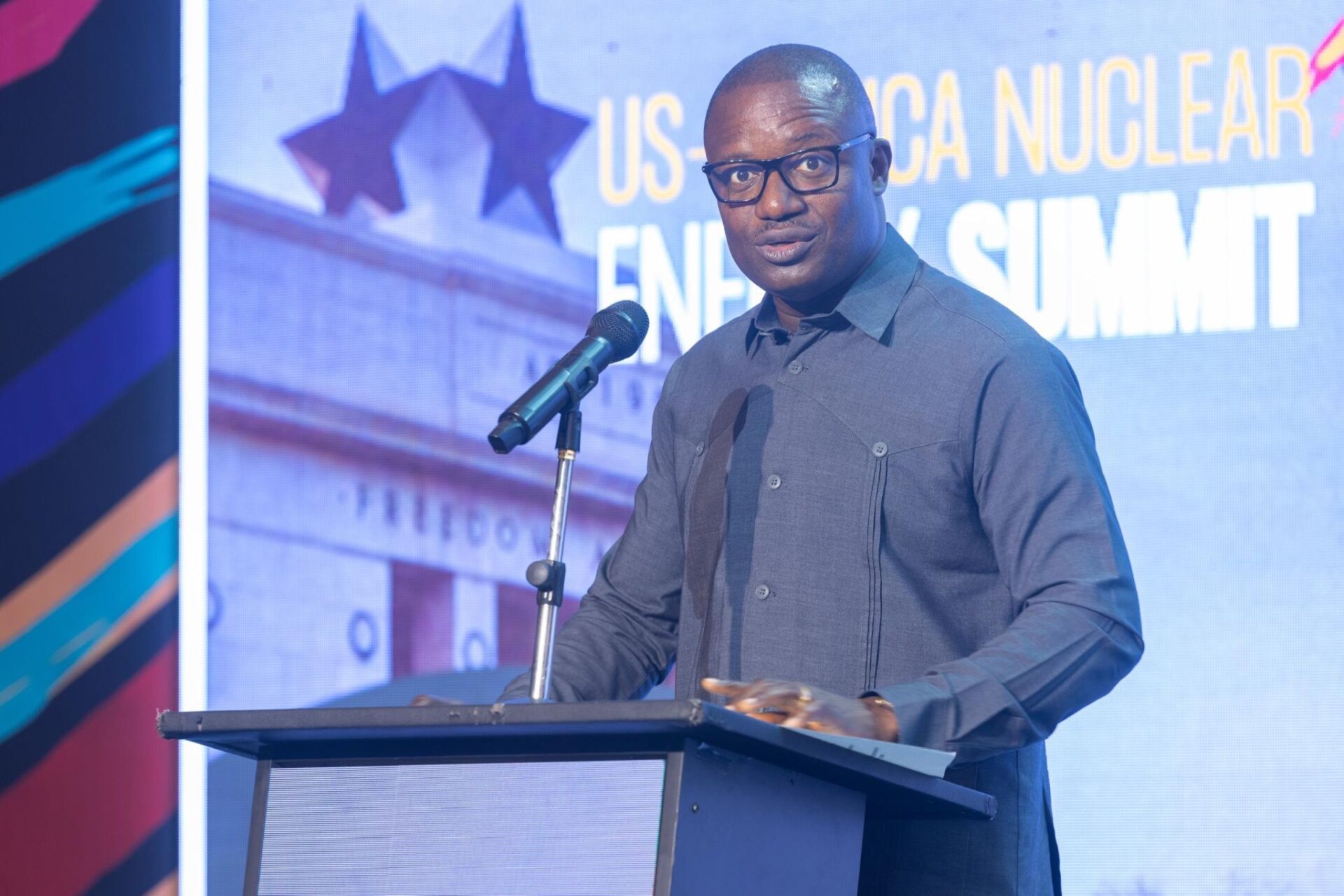
The Institute of Economic Affairs (IEA), Ghana, through its Nuclear Energy Centre of Excellence, has released an assessment of the U.S.–Ghana Nuclear Energy Summit held from 19–21 August 2026.
The assessment examines the major outcomes of the Summit and their implications for Ghana’s nuclear power programme, particularly as the country moves further into the implementation phase of its nuclear energy development agenda.
The IEA notes that the Summit represents an important development in Ghana’s engagement with international partners on nuclear energy and has the potential to strengthen cooperation in areas including nuclear infrastructure development, financing, technology partnerships, workforce development, regulation, nuclear safety and security, and institutional capacity.
However, the assessment emphasises that translating the commitments and opportunities emerging from the Summit into measurable progress will require sustained domestic action.
Key areas requiring attention include the completion of critical site characterisation and environmental studies, strengthening the institutional and regulatory framework, establishing credible financing arrangements, developing the electricity grid and associated infrastructure, strengthening local industrial participation, expanding human-resource capacity, and ensuring effective coordination among the institutions responsible for Ghana’s nuclear power programme.
The IEA further stresses the importance of maintaining regulatory independence, strengthening public communication and stakeholder engagement, and ensuring that Ghana’s nuclear energy decisions remain firmly anchored in the country’s long-term energy security and national development priorities.
The Institute views the U.S.–Ghana Nuclear Energy Summit as an important opportunity to accelerate progress, but notes that the ultimate measure of success will be the extent to which announced partnerships and commitments are converted into concrete programmes, investments, institutional reforms and implementation milestones.
Through its Nuclear Energy Centre of Excellence, the IEA will continue to independently monitor Ghana’s nuclear power programme, engage stakeholders and provide evidence-based policy analysis aimed at supporting the development of a safe, secure, economically sustainable and nationally beneficial nuclear energy programme.
Read the full IEA Assessment of the U.S.–Ghana Nuclear Energy Summit.