


IEA GHANA · NUCLEAR ENERGY CENTRE OF EXCELLENCE
Ghana Nuclear Energy Outlook 2026
From Programme Development to Investment Readiness
The condensed Outlook examines Ghana’s nuclear power programme, Phase II completion, electricity-system needs and the decisions required for a credible, affordable and accountable first nuclear investment.
November 2026 · Condensed edition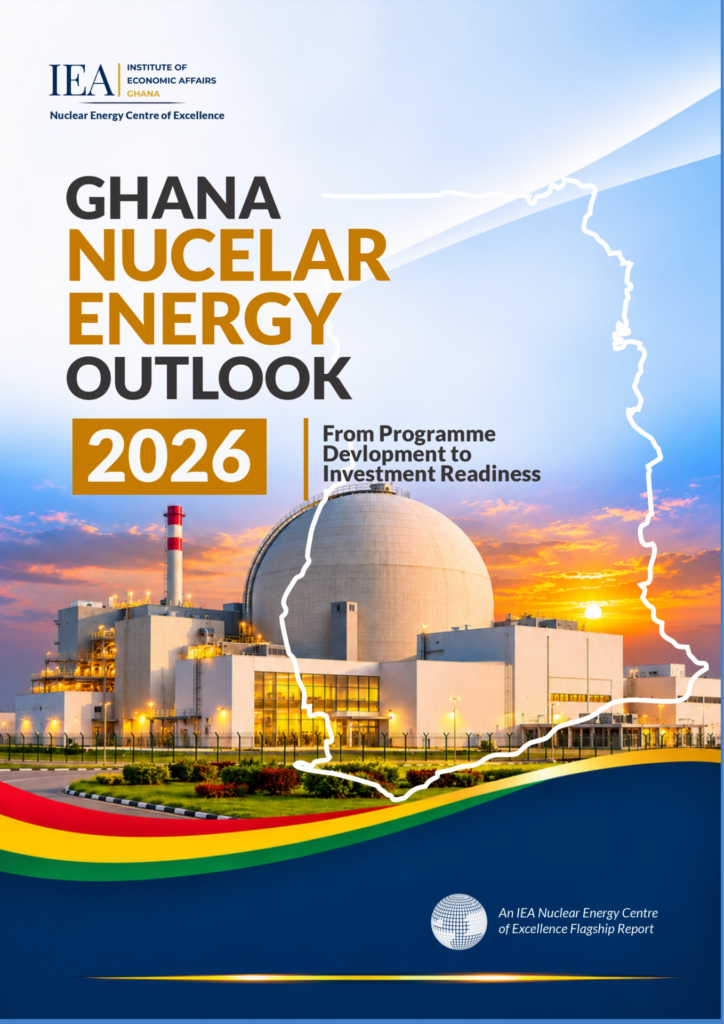
01 · ABOUT THE PUBLICATION
Why this Outlook matters
This independent IEA Ghana assessment evaluates Ghana’s nuclear option within the national electricity portfolio and distinguishes political commitments from validated Phase II evidence, regulatory requirements and investment-ready decisions. The main volume has ten chapters; detailed assessment instruments are preserved in a companion Technical Supplement (Annexes A–U).

What is the evidence?
Examine the observed power-system baseline, programme milestones and outstanding Phase II requirements.

What does readiness require?
Understand the distinct ten-pillar GNPRI method and 39-question Phase II evidence-validation instrument.

Which decisions come next?
Assess ownership, financing, grid, technology, safety and national capability before irreversible commitments.
02 · GHANA’S NUCLEAR JOURNEY
From programme development to investment readiness
Ghana declared entry into Phase II in August 2022. The government’s January 2027–December 2028 programme sets a preparation and contracting target, but completed site work, financing, regulatory permissions and nuclear electricity generation have not been established.

 Foundations · 2015–2019
Scientific and institutional foundations
Research and technical capabilities, the independent Nuclear Regulatory Authority and prospective owner/operator arrangements.
- Current status · Phase II
Phase II evidence and preparation
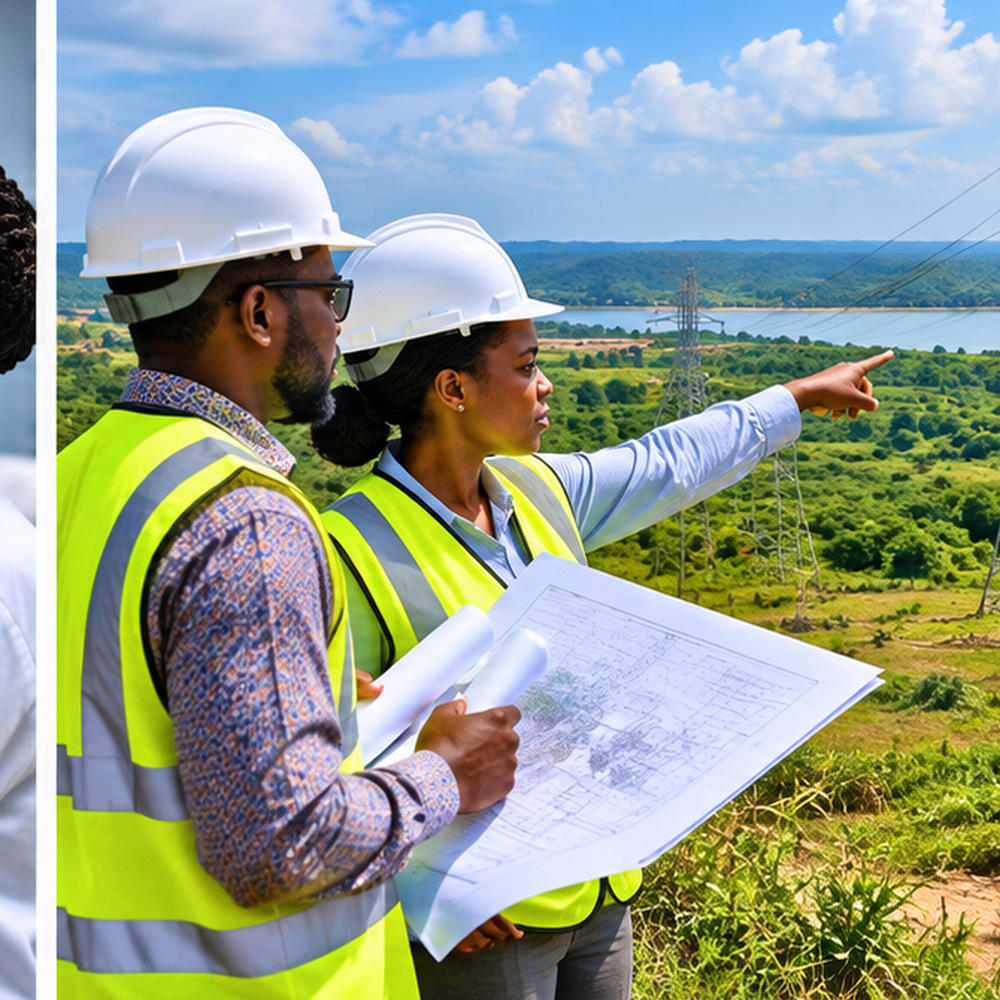
Since August 2022: site studies and land acquisition processes, technology comparisons, grid assessments, licensing preparation and institutional development.
- Government target · not project completion
Conditional 2027–2028 readiness programme
Announced US$200 million, 24-month readiness commitment and a December 2028 EPC-and-financing-contract target—not an electricity-generation date.


03 · INSIDE THE OUTLOOK
Explore the condensed Outlook
Six illustrated reading pathways across the condensed report’s ten chapters. These themes group related analysis; they are not the formal chapter titles or table of contents.
 01
Programme Development
Programme evolution, international cooperation, Phase II gaps and the two distinct readiness instruments.
Condensed report: Chapters 2, 3 and 8 02
Financing & Investment
The 2027–2028 readiness commitment, state ownership, fiscal exposure, procurement and bankability.
Condensed report: Chapters 5, 8 and 10 03
Safety & Regulation
Regulatory independence, safety, security, safeguards, emergency preparedness and lifecycle stewardship.
Condensed report: Chapters 3 and 6 04
Infrastructure & Technology
Electricity-system demand, site characterisation, reactor options, procurement and grid integration.
Condensed report: Chapters 1, 4 and 5 05
Workforce & Institutions
National competence, owner/operator capability, industrial participation, public engagement and international partnerships.
Condensed report: Chapters 3 and 7 06
Strategic Outlook 2027–2028
GNPRI and Phase II assessment, development scenarios, economic transformation and seven conditional decision gates.
Condensed report: Chapters 8, 9 and 10Thematic reading guides only. Chapter cross-references should be confirmed against the published report.
04 · KEY FINDINGS
What the condensed report establishes
Six evidence-labelled findings. Observed statistics, announced government commitments and proposed assessment instruments are deliberately distinguished; no GNPRI national readiness score is issued.

Ghana remains in the preparation phase; final technology procurement, financial close and a nuclear construction licence have not been demonstrated.
Executive Summary; Chapter 2 · verified status distinctionGovernment-announced nuclear-readiness programme for January 2027–December 2028; this is not verified disbursement or an annual cash appropriation.
Executive Summary; Chapters 1, 5 and 10 · 2027 Budget commitmentElectricity generated in 2025, providing an observed baseline for testing future nuclear and alternative generation portfolios.
Chapter 1, Table 2.1 · Energy Commission (2026)The proposed GNPRI strategic framework is introduced; this 2026 edition does not assign a validated national readiness score.
Chapter 8 · proposed IEA Ghana readiness methodologyThe separate Phase II completion instrument comprises three workstreams and thirteen work packages for evidence and action validation.
Chapter 8 · 39 questions, 13 work packages, 3 workstreamsThe government targets completion of readiness activities and signature of an EPC-and-financing contract, not the generation of nuclear electricity.
Executive Summary; Chapter 10 · target, not achieved milestoneSource: Energy Commission (2026), National Energy Statistical Bulletin; condensed Outlook, Chapter 1, Figure 4 and Table 2.1 (printed p. 15).
Observed 2025 electricity consumption: 21,822 GWh. The difference between electricity generated and consumed is not, by itself, a measure of technical losses.
05 · ROAD TO INVESTMENT READINESS
Seven proposed decision gates
The condensed Outlook’s seven-gate framework (Chapter 10, Table 19.1) sequences evidence, site, grid, technology, finance, safety and integrated assurance. Responsibility labels are indicative; formal decisions rest with competent institutions, not IEA Ghana.

 G1Before closure claims
Evidence baseline and accountable roles
Establish an auditable Phase II requirements baseline before declaring requirements complete.
Responsible / supporting institutionsIndicative: programme coordinating authorities, NPG and relevant technical institutions- G2Before licensing basis
Site and environmental evidence
Document site and environmental information sufficient to inform the appropriate licensing basis.
Responsible / supporting institutionsIndicative: NPG, environmental authorities and NRA within their mandates - G3Before technology commitment
Grid and system integration
Demonstrate transmission, reserves, demand and system adequacy under competing technology options.
Responsible / supporting institutionsIndicative: energy ministry, GRIDCo and power-sector institutions - G4Before preferred procurement
Technology and procurement integrity
Compare reactor and procurement pathways transparently using independent technical and commercial review.
Responsible / supporting institutionsIndicative: government, project developer and competent procurement institutions - G5Before binding sovereign liabilities
Fiscal, commercial and offtake risk
Assess financing affordability, sovereign guarantees, tariff effects and risk allocation.
Responsible / supporting institutionsIndicative: Ministry of Finance, government and prospective owner/operator - G6Before construction permissions
Regulatory and safety capability
Demonstrate funded nuclear regulatory capability, safety, security, safeguards and emergency preparedness.
Responsible / supporting institutionsIndicative: NRA and statutory safety, security and emergency institutions - G7Before irreversible commitment
Integrated technical and legal assurance
Record independent review of unresolved dependencies and the legal authority to proceed before irrevocable commitments.
Responsible / supporting institutionsCompetent statutory and programme authorities; no IEA Ghana approval role



Proposed policy decision gates, not completed milestones or statutory approvals. Source: Condensed Outlook, Chapter 10, Table 19.1. Gate approval belongs to competent institutions.
06 · ABOUT THE PUBLISHER
Independent research. Informed nuclear energy choices.
The Ghana Nuclear Energy Outlook is an independent policy publication of the Institute of Economic Affairs Ghana, prepared through its Nuclear Energy Centre of Excellence.
Institute of Economic Affairs Ghana
Nuclear Energy Centre of Excellence
IEA Ghana’s Nuclear Energy Centre of Excellence produces independent policy research, develops the proposed GNPRI methodology and convenes dialogue on verifiable Phase II completion and responsible nuclear energy investment.