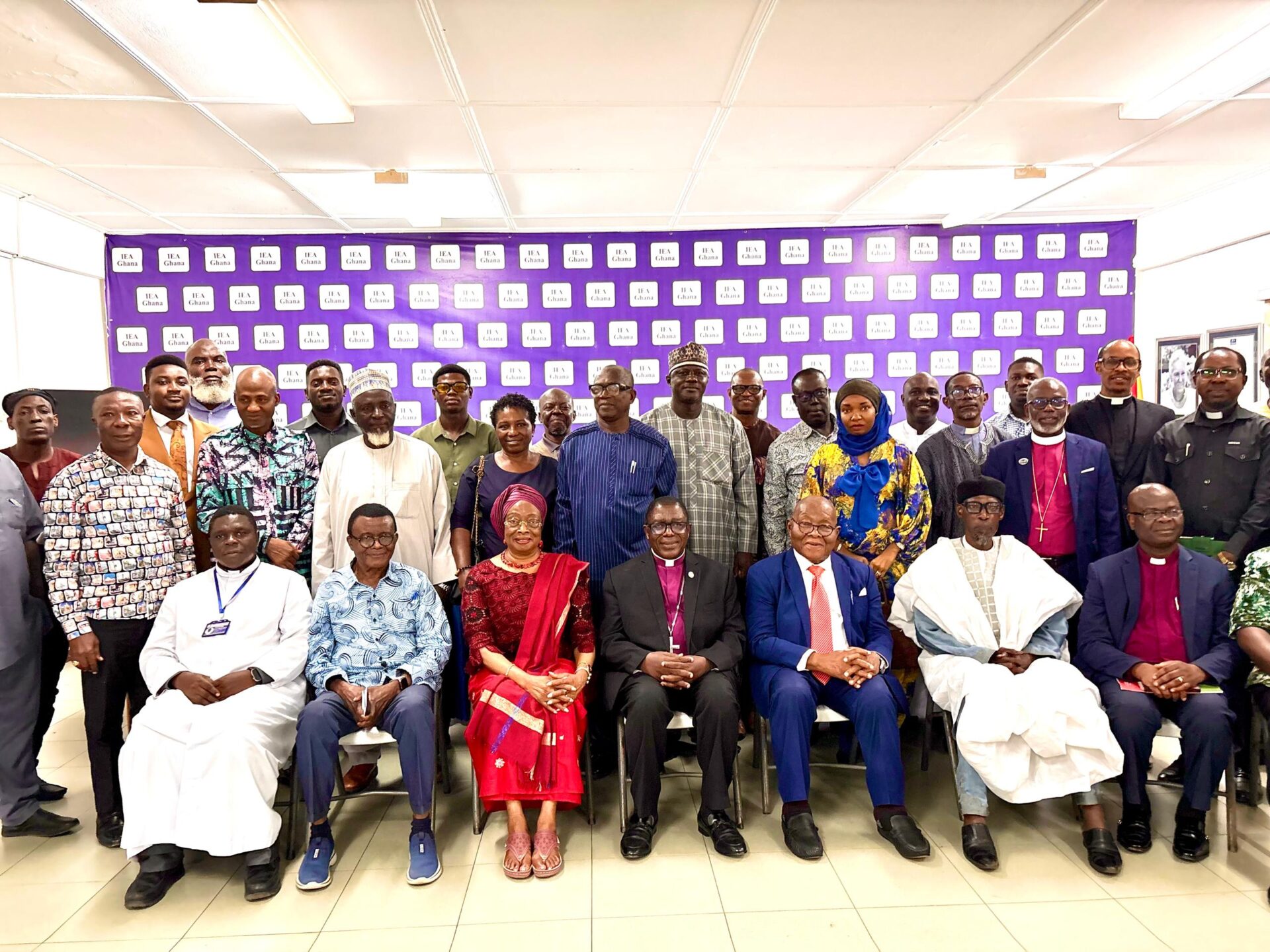
The Institute of Economic Affairs (IEA Ghana) on Tuesday, 29 September 2026, convened a special edition of its Views and Reflections Programme at the IEA Dialogue Centre in Accra to deepen public engagement on Ghana’s ongoing constitutional review process.
The dialogue, held under the theme “The Prempeh Committee’s Report and Government’s Position on Constitutional Review,” brought together distinguished representatives of the religious community and the media to reflect on the recommendations of the Constitution Review Committee and Government’s response to the proposed reforms.
The programme formed part of the IEA’s continuing effort to provide an independent and inclusive platform for informed discussion on important national governance issues. Recognising the far-reaching implications of constitutional reform for Ghana’s democratic development, the Institute is engaging different stakeholder groups to ensure that the national conversation benefits from a wide range of perspectives.
The session featured Most Rev. Dr. Paul Boafo, President of the Africa Methodist Council; Sheikh Aremeyaw Shaibu, Spokesperson for His Eminence, the National Chief Imam; and Mr. Albert Kwabena Dwumfour, President of the Ghana Journalists Association (GJA).
The participation of religious leaders and media professionals was particularly significant given the important roles both constituencies play in Ghana’s democratic and social development. Religious institutions remain influential voices on questions of national values, social cohesion, accountability and public morality, while the media continues to serve as a critical intermediary between citizens and the institutions of state.
Deepening the Constitutional Reform Conversation
The dialogue provided an opportunity to reflect on the broader implications of the constitutional review process and the need for reforms that respond to Ghana’s evolving democratic and governance experience.
Discussions highlighted the importance of ensuring that constitutional reform goes beyond technical amendments to individual provisions and addresses the practical functioning of Ghana’s democratic institutions. The process presents an opportunity to assess how the constitutional framework has operated over more than three decades and to consider whether existing governance arrangements continue to adequately promote accountability, institutional effectiveness, inclusion and democratic participation.
Participants also reflected on the importance of broad public ownership of the reform process. Constitutional reforms of lasting significance require more than governmental endorsement. They must be sufficiently understood by citizens and supported by a credible process of consultation capable of accommodating different perspectives.
The engagement therefore underscored the value of expanding constitutional discussions beyond political parties, government institutions and constitutional experts to include civil society, religious organisations, professional associations, the media and ordinary citizens.
The Role of Religious Institutions
The participation of religious leaders provided an important dimension to the discussion. Religious organisations have historically played significant roles in Ghana’s national development, including in the areas of education, health, peacebuilding and democratic stability.
Their involvement in the constitutional review discourse provides an opportunity to consider the ethical and social dimensions of governance and to ensure that reforms are examined not only from legal and institutional perspectives but also in relation to national values, social cohesion and the broader public interest.
The engagement also recognised the ability of religious institutions to facilitate public understanding and dialogue among communities across the country.
The Media and Constitutional Accountability
The role of the media was another important focus of the engagement. An effective constitutional democracy depends on a free, responsible and professional media capable of informing citizens, scrutinising public institutions and facilitating informed national debate.
As Ghana considers possible constitutional reforms, the media has an important responsibility to help translate complex constitutional questions into accessible public discussions. Accurate reporting and sustained public education will be essential if citizens are to meaningfully participate in decisions that may reshape the country’s governance architecture.
The participation of the Ghana Journalists Association therefore reinforced the importance of positioning the media as an active stakeholder in the constitutional reform process rather than merely as a channel for reporting the views of others.
Building a Nationally Owned Reform Process
For the IEA, the Views and Reflections Programme is intended to help create a more inclusive and informed national conversation around the recommendations of the Prempeh Committee and Government’s position on them.
The Institute considers public engagement essential to building confidence in the constitutional reform process. Differences of opinion are inevitable on matters as consequential as constitutional change, but a transparent and participatory process can help identify areas of consensus, clarify disagreements and strengthen the legitimacy of eventual reforms.
The September 29 dialogue with religious and media leaders therefore formed part of a broader process through which the IEA is bringing different sectors of Ghanaian society into the constitutional review conversation.
The Institute will continue to provide platforms for stakeholders to examine the proposals, assess their implications and contribute ideas towards strengthening Ghana’s constitutional democracy.
Through the Views and Reflections Programme, the IEA remains committed to supporting a constitutional review process that is inclusive, evidence-informed, participatory and responsive to Ghana’s long-term democratic and developmental aspirations.